Bithumb Confirms Breach as Hackers Hit 3 South Korean Financial Firms
Key Takeaways
Bithumb found unauthorized access to its groupware on Oct. 27 and is checking whether customer data leaked.Daishin Securities said data on 38,490 customers leaked, while Mirae Asset also reported a hacking incident.South Korea’s Financial Supervisory Service is investigating, and no theft of funds has been reported.
What Bithumb Disclosed
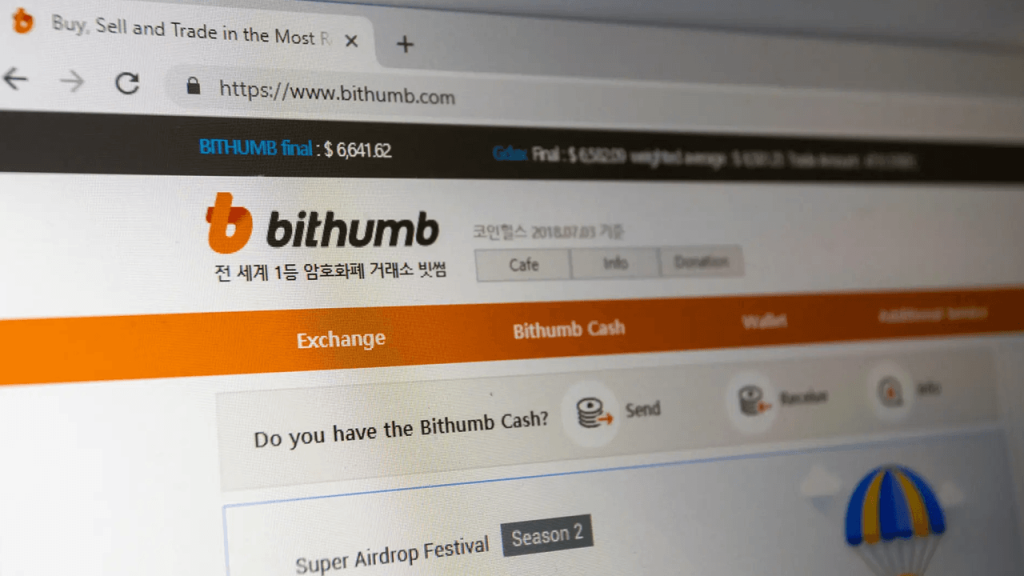
According to Yonhap News Agency, Bithumb confirmed that an unauthorized external party accessed its internal mobile groupware system, resulting in a personal data leak. Groupware is the internal collaboration software companies use for messaging, email, scheduling and document approvals, which means it often holds staff details, internal communications and sometimes customer records.
The exchange discovered the incident on Oct. 27 and is still investigating whether any customer information was compromised. So far, no fund theft has been reported, and investigators have not established a link between the Bithumb intrusion and the other incidents disclosed the same day.
It bears mentioning that a breach of back-office systems is different from a hot wallet hack, where attackers drain crypto directly. But it can still open the door to targeted attacks on users and employees.
Daishin and Mirae Asset Also Hit
Bithumb was not alone as two other South Korean financial institutions, namely Mirae Asset Global Investments and Daishin Securities, were also confirmed to have suffered cyber intrusions.

Daishin Securities disclosed that personal and credit information belonging to 38,490 customers had been leaked, making it the largest confirmed exposure among the three. Mirae Asset Global Investments separately reported a hacking incident without detailing how many clients were affected.
South Korea’s Financial Supervisory Service (FSS), the country’s main financial watchdog, said it is investigating all three cases.
Data Leaks Galore
Recent crypto breaches have shown the severity of this burgeoning trend, with the Keystone hardware wallet data breach exposing buyers’ addresses to scammers last week, with the fallout later deepening to 18,835 hardware wallets, all of whom now face destruction.
Back-office systems have become a favored target and hardware wallet maker Foundation faced a customer data breach yesterday while hackers were also able to infiltrate GMO’s trading cloud, putting 26,739 servers at risk. In India, exchange CoinDCX admitted a $16 million hit after its CEO dismissed suspicious transfers.
A Rough Year for Bithumb
The breach adds to a turbulent 2026 for Bithumb because in February, the exchange mistakenly credited 620,000 BTC to 249 users during a promotional event. It recovered 618,212 BTC, or about 99.7%, and promised to compensate affected customers in full plus an additional 10%.
Additionally, it should be noted that Korean exchanges, in particular, have been repeat targets of such attacks with rival Upbit suffering a hot wallet hack on the Solana network in November 2025 that drained about $36 million (an attack local authorities suspected North Korea’s Lazarus Group of carrying out).
The incident also lands as Seoul struggles to settle its broader crypto rulebook, with the country’s crypto tax facing a fourth delay.